Beautiful, Fragrant, and Tangle-Free: The Ultimate Guide to Proper Dog Coat Care
Every dog owner dreams of their four-legged companion having a clean, shiny, and soft coat. The truth is, a dog's coat is not just about looks – it is the dog's primary line of defense against the cold, sun, moisture, and dirt.
Whether you have a fluffy Samoyed, a curly Poodle, or a short-haired Pug at home, the basic rules of care remain the same. Let’s take a look at how to keep your dog’s skin and coat in top condition and what common mistakes you should avoid.
1. Regular Brushing: The Key to Success (And Not Just for Long-Haired Breeds)
Brushing is about much more than just removing dead hair. It acts as a wonderful skin massage that boosts blood circulation and evenly distributes natural oils along the entire length of the hair, giving the coat a natural shine.
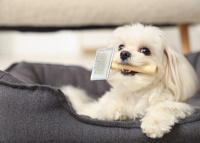
- Long-haired and curly breeds (Poodles, Bichons, Maltese): These require daily brushing. If neglected, the coat will mat and form tangles (dreds) that often have to be cut out.
- Short-haired breeds (Pugs, French Bulldogs): Even though it might not seem like it, they shed intensely. Rubber brushes or grooming gloves work best for them, as they easily trap those fine, stiff hairs.
- 💡 Grooming Salon Tip: Never brush a completely dry and tangled coat "dry." It causes the hair to break and hurts the dog. Always use a leave-in spray conditioner or a detangler to soften the coat first.
2. Bathing: Forget About Human Shampoos
This is the most common mistake made by beginner dog owners. The pH of a dog's skin is completely different from human skin (dog skin is much more neutral to alkaline). By using your own shampoo—even a baby shampoo—you dry out the dog's skin, disrupt its protective barrier, and invite eczema, dandruff, and itching.
How to Give a Proper Bath
- Thorough Brushing: ALWAYS thoroughly brush your dog before getting them wet. If you wet a dog that has knots in its coat, the water will tighten them into "concrete" mats that cannot be brushed out.
- Shampooing: Use exclusively professional dog cosmetics. Dilute the shampoo slightly with water in your palms (professional shampoos are often highly concentrated), apply it to the coat, and gently massage. Be very careful around the eyes and inside the ears!
- Conditioner is a Must: Many people skip the conditioner, which is a big mistake. While shampoo opens up and cleans the hair, conditioner locks it back in, hydrates it, and restores elasticity. Without it, the coat will quickly get dirty and tangled again.
- Thorough Rinsing: You must rinse the coat until the water runs completely clear. Any cosmetic residue left on the skin can trigger an allergic reaction.
3. Drying: A Towel Is Not Enough
Many owners simply wipe their dog down with a towel after a bath and let them run free. For dogs with a thick undercoat or long hair, this is highly dangerous. Moisture gets trapped right next to the skin, creating a warm environment where bacteria multiply, leading to a so-called hot-spot (acute moist dermatitis) – a painful, inflamed lesion.
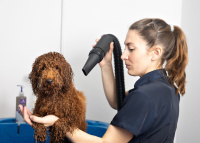
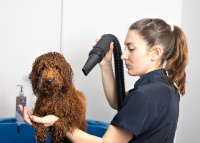
Therefore, gently dry your dog with a towel after bathing (by pressing/squeezing, not harsh rubbing, which tangles the coat) and then blow-dry them. Use lukewarm air and gently brush through the coat while drying.
4. Nutrition Comes from Within
You could use the most expensive shampoo in the world, but if your dog doesn't have a high-quality diet, their coat will be dull and shed excessively.
It is well worth adding premium oils to their diet – salmon oil or marine algae oil are ideal, as they are rich in Omega-3 and Omega-6 fatty acids. These give the coat an incredible shine and soothe sensitive skin.
Summary: When to Visit a Professional Dog Salon (Groomer)?
Although you can handle basic hygiene at home, treat your dog to a visit to a professional salon at least once every few months (depending on the breed). An experienced groomer handles clipping and professional undercoat removal (deshedding), alongside tasks that owners are often afraid to tackle at home:
- Safe nail trimming.
- Ear canal cleaning and hair plucking (essential for preventing painful ear infections).
- Ozone therapy and special salon masks for deep skin and coat regeneration.
- 🐾 Looking for the best for your pet? Check out our selection of professional cosmetics and tools for both home and salon grooming at Profikozmetika.sk